Why Quantum Computing Is So Exciting Today

To say that timing is everything in markets is a massive understatement. History shows that the greatest opportunities and risks emerge just before a technological inflexion point becomes obvious to everyone.
Quantum computing appears to be approaching such a moment.
The 4-Year Path to Fault-Tolerant Quantum Computers:
Public roadmaps from leading quantum computing companies increasingly converge on a key milestone: fault-tolerant quantum computers with more than 1,000 logical qubits by around 2030.
This threshold matters because logical qubits, remember, these are error-corrected qubits, not raw physical ones, mark the transition from experimental systems to machines capable of solving problems that are fundamentally out of reach for classical computers.
Companies such as IBM, IonQ, and Infleqtion have all published roadmaps that, while differing in approach and ambition, point toward this same logical-qubit regime within the next 5 years.
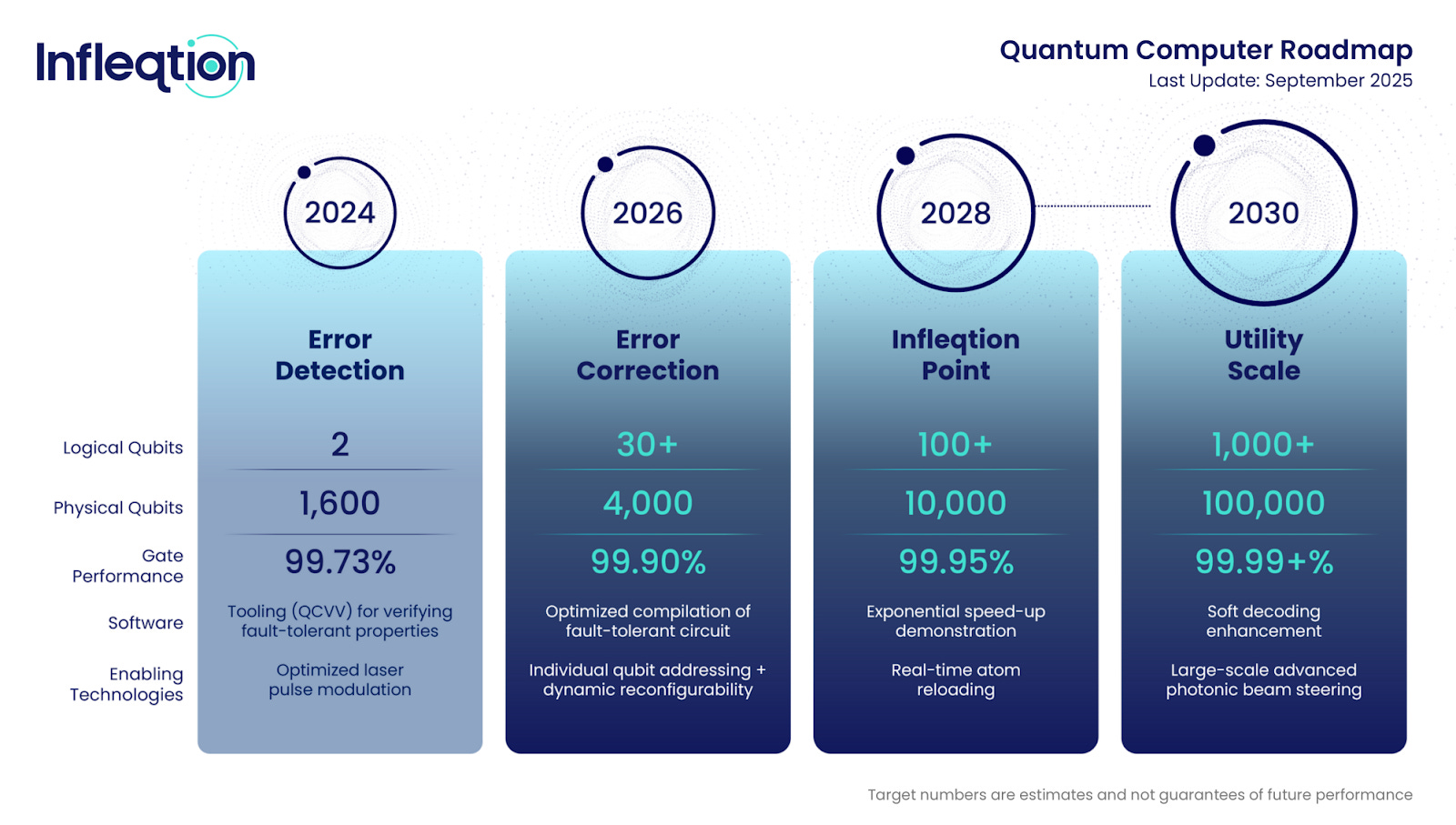
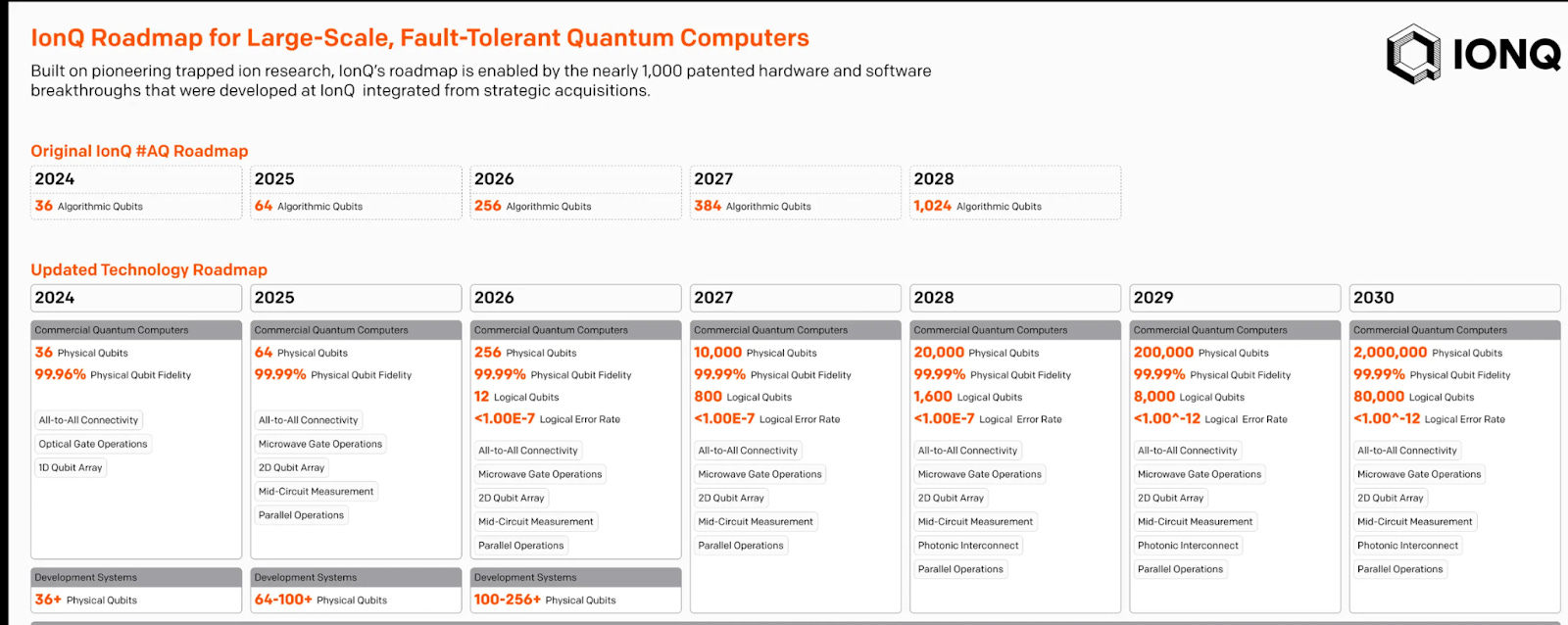
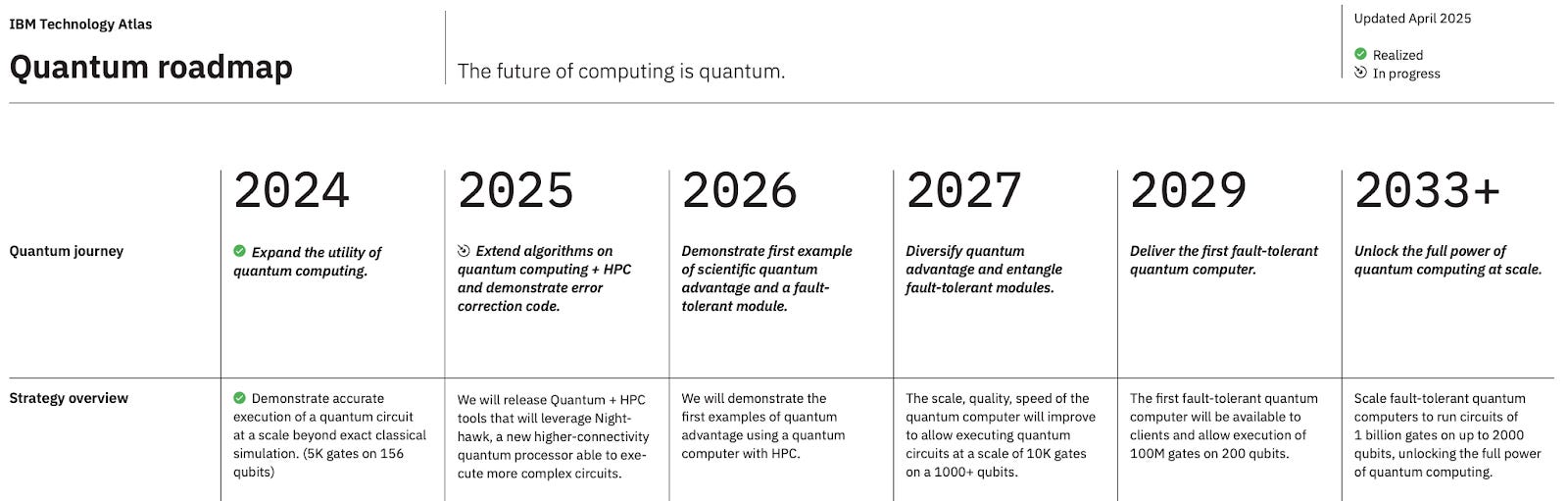
This convergence is not accidental. It reflects growing confidence in quantum error correction, hardware scaling, and system-level engineering.
A further signal that corporate quantum roadmaps should be taken seriously comes from academia itself. John Preskill, widely regarded as one of the leading figures in quantum computing, recently highlighted a major shift in the feasibility of cryptanalysis.
In his 2025 essay “Quantum computing in the second quantum century,” Preskill notes that the estimated number of physical qubits required to run a cryptanalytically relevant quantum algorithm has dropped dramatically.
Even traditionally sceptical voices have recently shifted their tone. Notably, quantum computing expert Scott Aronson has acknowledged that rapid hardware progress now makes it plausible that quantum computers could threaten today’s public-key encryption sooner than previously expected. He remarked:
“[G]iven the current staggering rate of hardware progress, I now think it’s a live possibility that we’ll have a fault-tolerant quantum computer running Shor’s algorithm before the next US presidential election. And I say that not only because of the possibility of the next US presidential election getting cancelled, or preempted by runaway superintelligence!”
This growing optimism is not confined to academia. Governments and major corporations echoed similar sentiments throughout 2025, underscoring a broader shift in expectations:
March 2025: U.S. Commerce Secretary Howard Lutnick stated, “The only thing I think I really need to do in terms of regulations is post-quantum cryptography.”
June 2025: NVIDIA CEO Jensen Huang described quantum computing as approaching an “inflection point,” with practical problem-solving capabilities emerging within a few years.
2025: The United Nations designated the year as the International Year of Quantum Science and Technology, signalling global political recognition of the field’s importance.
Q3 2026: The National Quantum Initiative Reauthorization Act will likely be renewed after a temporary lapse, following earlier NQI legislation that had passed with overwhelming bipartisan support.
Taken together, these statements and policy actions reflect a marked convergence of expert opinion, industrial investment, and governmental urgency around the imminent impact of quantum computing, particularly its implications for cryptography and national security.
In upcoming posts, I will write more about how quantum computing could impact the global economy and our daily lives. I also plan to write about the specific risks to cryptocurrencies, which, given their decentralised nature at in a more precarious position to adapt to the looming quantum threat.
A portfolio for the Quantum Age
Given these developments, long-time readers will know that I began deliberately reallocating a portion of my Bitcoin portfolio toward quantum computing investments last year. I see this not as a short-term trade but as a strategic response to a technological inflexion point with profound implications for cryptography, computing, and capital markets.
In this publication and in future issues, I will continue researching leading quantum computing companies, tracking technological and policy developments, and sharing updates as my investment thesis evolves.
This deeper analysis is reserved for premium subscribers. If you find this work valuable and want to support my ongoing research, I encourage you to subscribe and join me as we navigate this transition together.